
About Travel Notes™ Budget Travel City Guides Countries Feedback Regional Travel Videos Travel Writing

Car Hire Cruises Flights Hostels Hotels RTW Tours Vacations Weather Where To
Google+ Travel Notes on Google Plus Add URL to Travel Notes - Advertise on Travel Notes - Link To Travel Notes - New Listings - Travel Blogs - Travel News - Travel Twip - Travel on Twitter.
Subscribe to the Travel Notes Blog Travel Notes: Travel Notes Blog

Following The Tour de France

Tuesday, July 13, 2010

The Official Travel Notes Blog

There's something special about the Tour de France that, like all great sporting events, should be experienced live.

The best place to watch the race unfold is in front of the television.


Alberto Contador of Astana leading the way on the final climb to Verbier - Tour de France 2009
Alberto Contador - 1st in Verbier


With cameramen on motorbikes and tv crews shooting from helicopters in the sky, you are treated to different visual angles of the cyclists rolling through a varied French countryside.

A good commentary team on board can share a wealth of background information on the various chateaux, regional foods, and even something insightful about the cycling itself.

If you're a fan of Eurosport, you can even join in with other cycling fans on the (Yahoo) Message Boards.

While watching the race on television you'll see places with a number in brackets. This number represents the French Department (département).

For real atmosphere though, you would want to get out on the road for a stage or two; especially after you've seen a few tours on the screen.

Where to See The Riders For Real

The first thing to do is to look at the Tour de France route and see if the peloton will pass by anywhere you intend to be, or anywhere you would like to visit.


If you're using public transport, the departure and arrival points are often the easiest places to get to and there's always a party atmosphere when 'Le Tour' comes to town.

Last minute accommodation may be hard to find though and large crowds can make it difficult to get good pictures, if you don't have a photographer's bib.

If it's photographs of the cyclists you're after, then it's better to stake out a place on the route itself. This needs thinking about too; or you could find yourself waiting for hours, only for the peloton to pass you by in seconds.


Lance Armstrong in 2009 - by Michel Guntern

Riders slow down at feeding stations and tend to go slower on the steeper inclines.

If you're fortunate, you might even be lucky enough to have a bidon (water bottle) discarded in front of you; as we did, just after the Delle feeding station in 2009.


Getting Into Position

The official Tour de France website gives an estimated time schedule for each stage but not when the roads close; check out the local municipal websites for that.

If you have a camper van (RV or motor home) and want to park it on the side of the route, you need to find your spot early; sometimes the night before. Choosing this option also means you could be stuck in traffic jams for hours after the race.

You may prefer to study a local map and leave the car close to where you want to be but not on the route itself; for a quicker getaway.


Keen cyclists can always get themselves into good positions on the climbs and then beat the traffic jams back down to the bottom.


Waiting For The Riders

The Caravane precedes the cyclists by about an hour and a half. This is when the decorated vehicles of the sponsors pass by; promoting their brands in something of a carnival atmosphere. When you see helicopters approach, you'll know the cyclists are getting closer.

It's also a good idea to check out the Weather in France for the coming week. Meteo.fr has a good weather map that you can zoom in on.
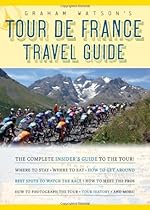
Graham Watson's Tour de France Travel Guide

If you're really interested in travelling around France to follow the tour, then you should consider getting your hands on a copy of Graham Watson's Tour de France Travel Guide.

Paris Champs-Élysées

The last stage of Le Tour, with its prestigious finish on the Champs-Élysées, is always highly attended.

You may not get the best view of the riders at the finish but at least there's plenty of hotels in Paris and you can say you were there. If you can get there early enough (the night before) the fountain by the final run-in is a good place to be.

The Place de la Concorde is where the team buses are parked up and you may catch some of the riders around here after the race is over.

Tour de France 2011 - July 2nd to July 24th:
1 Saturday, 2nd July: La Barre-de-Monts to Mont des Alouettes.
2 Sunday, 3rd July: Les Essarts (team time-trial).
3 Monday, 4th July: Olonne-sur-Mer to Redon.
4 Tuesday, 5th July: Lorient to Mûr-de-Bretagne.
5 Wednesday, 6th July: Carhaix to Cap Fréhel.
6 Thuray, 7th July: Dinan to Lisieux.
7 Friday, 8th July: Le Mans to Châteauroux.
8 Saturday, 9th July: Aigurande to Super-Besse Sancy.
9 Sunday, 10th July: Issoire to Saint-Flour.
10 Tuesday, 12th July: Aurillac to Carmaux.
11 Wednesday, 13th July: Blaye-les-Mines > Lavaur.
12 Thursday, 14th July: Cugnaux to Luz-Ardiden.
13 Friday, 15th July: Pau to Lourdes.
14 Saturday, 16th July: Saint-Gaudens to Plateau de Beille.
15 Sunday, 17th July: Limoux to Montpellier.
16 Tuesday, 19th July: Saint-Paul-Trois-Châteaux to Gap.
17 Wednesday, 20th July: Gap to Pinerolo.
18 Thursday, 21st July: Pinerolo to Galibier Serre-Chevalier.
19 Friday, 22nd July: Modane to Alpe-d’Huez.
20 Saturday, 23rd July: Grenoble (individual time-trial).
21 Sunday, 24th July: Créteil to Paris Champs-Élysées.
 
Large Map - Cycling on Twitter.

Labels: , , , , ,

Four Days in Switzerland

Tuesday, September 18, 2007

The Official Travel Notes Blog

I'm often asked what are the 'must-see' places in Switzerland and what's best to see in only a few days.

A similar question was posed in the Travel Notes forum, and as I spent a lot of time on the answer I thought I'd post it on the blog; to reach a wider audience.

Basically, kelly wants to fly in to Zurich on a Thursday or Friday morning and fly out again around noon on the Monday. In this time, kelly wanted to know what there is to see in Zurich and aims to travel to Geneva (for a cruise on Lac Leman) and hopes to see The Alps.

If you plan to do a similar itinerary, then this post is for you.

Luckily Switzerland is a fairly small country and the train/bus connections are very good. The downside is, there are no night trains where you could save on accommodation.

With the short amount of time you're allowing yourself, I'm not sure if you'd really want to stay in Zurich or not.

If you do, the Hotel Central is close to the main station and there's a tram hub 'Central' right outside.

Zurich Sightseeing

Zurich is fairly compact, for the visitor, and 'essential sights' are easy enough to do on foot.

First stop would probably be some window-shopping along Bahnhofstrasse.

The 'old town' is over to the left of here (off Rennweg, near the Baly shoe shop) and the little back streets will lead you up to a nice view of the Limmat (from Lindenhof - a shady square with an outdoor chessboard).

The Schipfe, is a little artisan's street along the bank of the Limmat (below Lindenhof).

Walking along the Schipfe will bring you to the Rathaus and Rathausbrücke (bridge). You could cross over here, but I would continue up past the Münsterbrücke and up to the Quaibrücke. This is where boats leave for tours on Zürichsee.

If the weather is fine, a popular excusion is out to Rapperswil by ship - for a fish lunch - and return to Zurich by train.

Crossing over this bridge brings you to Bellevue.

As you walk back down the Limmat, be sure to look in at some of the back streets on the right; especially after the Grossmünster.

The Münstergasse leads down onto the Niederdorfstrasse (Dörfli); home to trendy shops, bars and pubs - the area is a popular part of Zurich's nightlife.

Niederdorfstrasse then ends and opens out onto 'Central'.

Getting Out of Zurich

The Swiss Pass affords you unlimited travel on Swiss Travel System's public transport network on either 4, 8, 15, 22 days or 1 month.

It costs about 255 Swiss francs for 4 days.

If you do buy the Swiss Pass, you might find yourself spending most of your time on public transport; as you try to get the most out of it. It is a very good way 'to see the country' in just a short time though.

An option here, to save you checking in and out of hotels and travelling around with your bags, would be to use Zurich as your base and make a different train/bus/boat journey every day.

Fastest trains are the Inter Citys.

When you go to Geneva (on the fastest route), you could even stop off at Berne (the capital of Switzerland) for a couple of hours.

Scenic Routes and Excursion Ideas

The more scenic option would be to do the 'GoldenPass Line' (timetable); travelling from Zurich to Lucerne (Luzern, in German) and getting on the panoramic train through Interlaken and Zweisimmen to Montreux (home of the yearly Jazz Festival - in July).

The 08:55 panorama train from Lucerne arrives in Montruex at 14:15 and from Montreux, there are good train connections to Geneva (Genève in French, or Genf in German); with the best connection departing Montruex at 14:19 and arriving in Geneva at 15:24.

Boats on Lake Geneva (Lac Leman):
The cheapest way to 'cruise on Lake Geneva' (free with a Swiss Pass) is to take the boat from Geneva to Nyon and return to Zurich by train from there (if you're doing day-trips).

We're entering the Autumn timetable now (18th Sept to 28th October), so you might find that some services are reduced.

The journey would be possible to do in a day, with a very early start from Zurich (07:35 or 08:04 - arrives Luzern 08:25 or 08:49), but it's probably better to get to Luzern in the late afternoon of day one (after some Zurich sight-seeing) and overnight in Lucerne.

Stay in Interlaken, if you prefer to break up the journey with a visit to Jungfraujoch.

Interlaken even deserves a visit in itself. But if time is limited and you want to see more of the country, then you'll have to see less of the towns.

The last train (best connection) from Geneva (21:45) gets into Zurich at 00:38, while the 20:14 from Geneva will get you to Zurich at 22:56 and the 20:45 at 23:30.

Swiss Train Timetables.

Lake Geneva

Or you may prefer to stay the night in Geneva; especially if you want to go on a 'proper tour' with the Lake Geneva Cruise Line.

Another option for 'Cruising Lake Geneva on the Cheap' is to use the Mouettes Genevoises shuttle service.

Swiss Boat also offer a number of Lake Geneva cruise options: along the Rhône, of the Castles, of the Mermaid, or of the Parks.

The Alps

As for the Alps, there are many beautiful spots. Zermatt (The Matterhorn) is one of my favourites. This is in the Valais, where you can get the red, mountain train from Brig. Saas Fe is also nice (Postbus from Brig), but probably for those with more time.

Another popular 'Alpine' area is around Interlaken. Or more to the point, Lauterbrunnen/Grindelwald. Especially for those who want to see the Jungfrau, Eiger and the Revolving Restaurant featured in the James Bond film 'On Her Majesty's Secret Service' on the Schilthorn, at Mürren.

The third popular area is Graubünden. Head out of Zurich towards Chur; for Arosa, Davos, Klösters, Lenzerheide and St Moritz.

Postbus - Swiss Alps

A good way to really experience The Alps is to travel by bus; over the mountain passes.

If you're an early riser and would like to get in a good cross section of Switzerland, in just a short time, it is possible to combine St Moritz with Ticino - the Italian part of Switzerland, just south of the Alps.

Departing Zurich at 06:37 (or 07:37), the train arrives in Chur at 07:52 (or 08:32).

Julier Route Express:
You then need to walk across to the Postauto depot for the bus to St. Moritz - departs at 08:00 (or 09:10).

The bus arrives in St Moritz at 10:34 (or 11:34).

Times are valid until 14th October, 2007.

Palm Express:
After a light brunch, the bus to Lugano leaves at 12:20 and arrives at 16:10. The journey offers superb views of Lake Como.

If you're lucky with the weather, you'll be able to stroll around Lake Lugano in the late afternoon and eat some Italian cuisine before taking an evening train back to Zurich. The journey takes about three hours. The last train from Lugano to Zurich is at 20:35, although the 19:46 might suit you better - arriving in Zurich at 22:29.

The Glacier Express

Another one of the 'Great Train Journeys in Switzerland' is the Glacier Express; connecting St. Moritz with Zermatt.

Trains leave St. Moritz at 09:02 and 10:02, arriving in Zermatt at 17:04 and 18:04.

Alternatively, trains depart Zermatt at 09:08 and 10:08, arriving in St. Moritz at 16:58 or 17:58.

The shorter option, is to just do the Brig to St. Moritz part of the journey; departing Brig at 11:41 for a 17:58 arrival in St Moritz.

An 08:50 departure from Geneva arrives in Brig at 10:46; or an 08:32 departure from Zurich arrives in Brig at 11:06.

The Grand Tour of Switzerland

Putting this all together, you could do a very grand tour of Switzerland in just 4 days.

Assuming an arrival in Zurich on the Thursday morning, you could see the sights in Switzerland's 'Little Big City' and move on to Luzern; for the night.

Friday could be spent on the 'Golden Pass', with a little early-evening cruise on Lake Geneva thrown in.

If you stay near the station, in Geneva (on Friday night), you'll be nicely placed for an early departure to Brig and across to St. Moritz.

On Sunday, you could take the 'Palm Express' to Lugano and get back to Zurich late in the evening; ready for your flight out at noon on Monday.

Labels:

Regional Directory - Search The Web - Subscribe to Updates.

Travel Notes Hub

Travel Articles

Michel Guntern on Facebook
TravelTweet on Twitter

Search City Hotels

Search 1800-Hostels


Follow This Blog on Facebook

Join the founder of Travel Notes on Facebook Connect With Travel Notes

Add to Flipboard Magazine

Car Hire Cruises Flights Hostels Round-The-World Specials Tours Vacations
TravelNotes.org: Travel Notes Blog - Toolbar